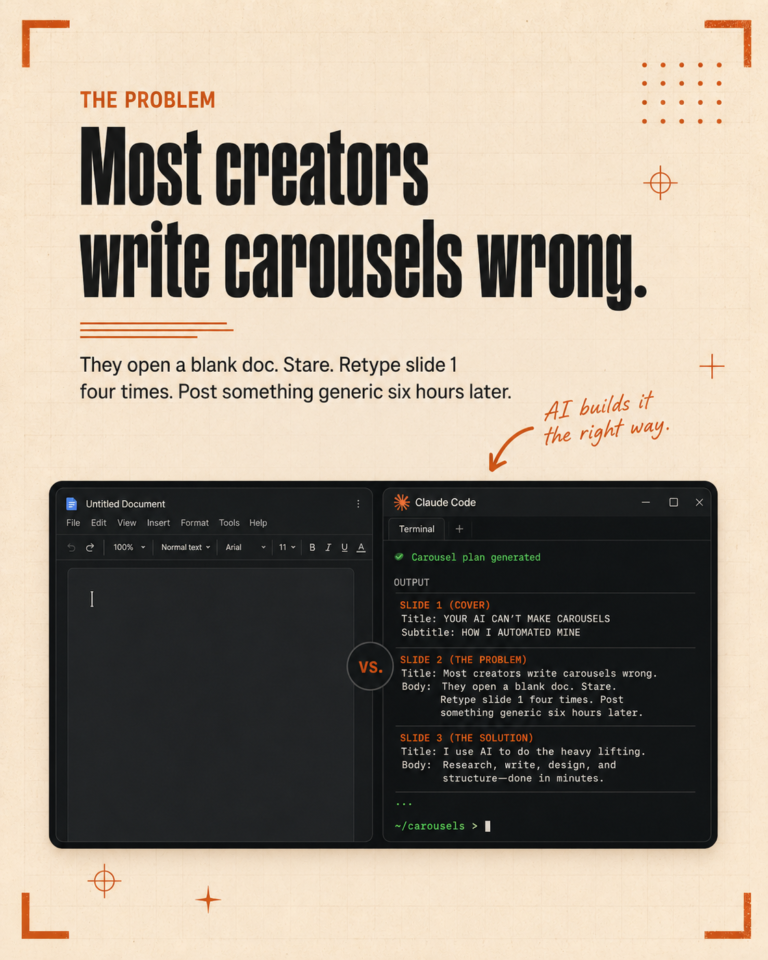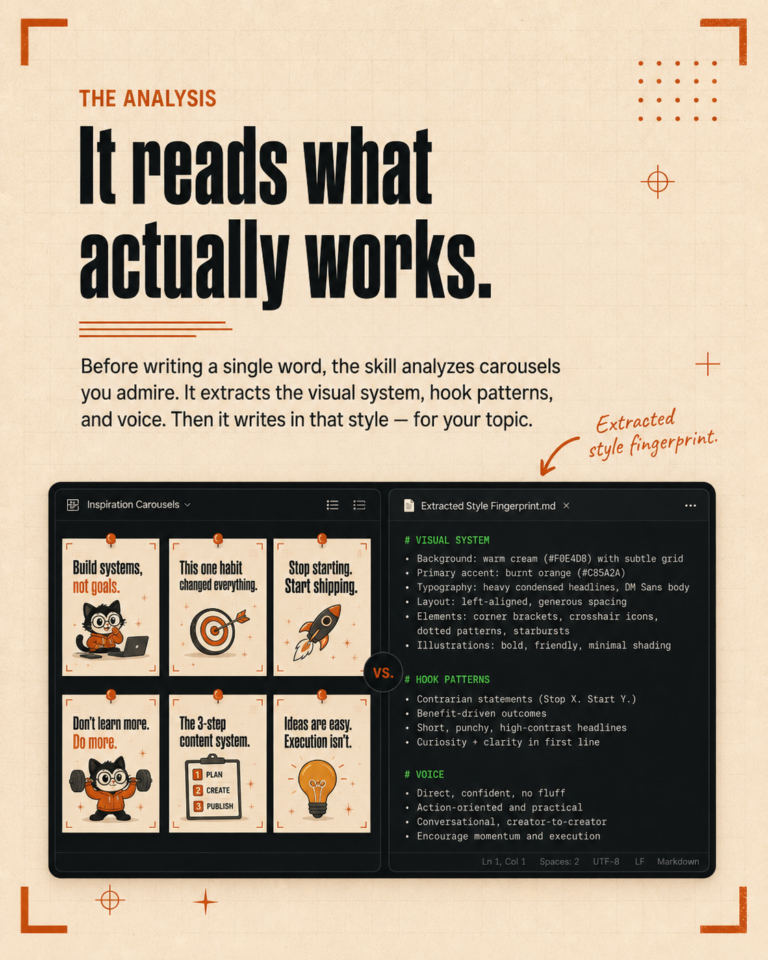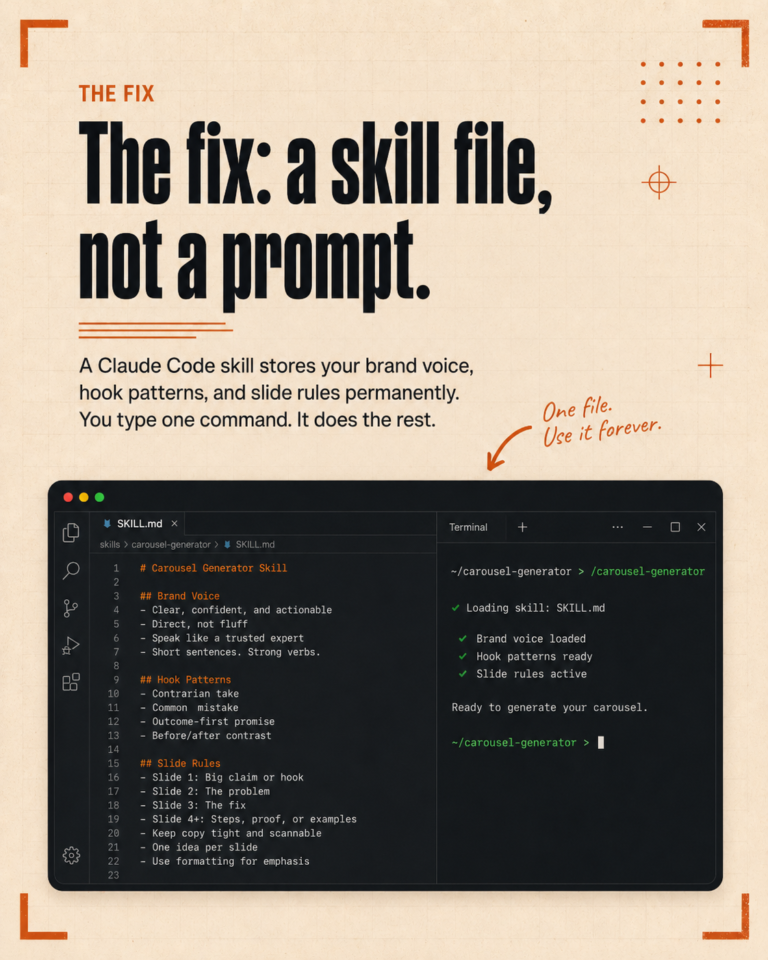
You film a 15-minute video. Good content, solid insights, worth sharing. Then you sit down to repurpose it and reality hits. You need a YouTube title and description. Instagram caption. TikTok caption. LinkedIn post. Blog draft. Thumbnail concepts. Each platform has different rules, different formats, different audiences.
Two hours later, you have written for three platforms and you are out of energy. The video sits on your hard drive half-distributed. Sound familiar?
At The Igniting Studio, we solved this with what we call a content engine. One input, multiple outputs. A single video transcript goes in, and platform-ready content for 7 or more channels comes out. This post explains exactly how it works, what tools you need, and how to build your own.
The Content Engine Concept
A content engine is a system that takes one piece of source content and transforms it into multiple platform-specific outputs. The idea is not new. Marketers have talked about content repurposing for years. What is new is that AI makes it practical to do at scale without a team.
The concept is simple. Film once. Write once. Then let the system handle the adaptation for every platform. Each output follows the voice rules, format requirements, and audience expectations of its destination platform.
Here is what our content engine produces from a single video transcript:
- 3 YouTube title options (question-based, under 65 characters)
- Full YouTube description with chapters and SEO keywords
- YouTube tags
- 3 thumbnail concepts with image generation prompts
- Instagram caption with researched hashtags
- TikTok caption with researched hashtags
- YouTube Shorts caption
- LinkedIn post adapted for that platform’s style
- Blog post draft (800 to 1,200 words)
- Newsletter snippet
- Pull quotes for social graphics
That is 10 or more content pieces from one video. The total time from transcript to all outputs: about 15 minutes of AI generation plus 30 to 45 minutes of human review and editing.
How We Turn One Video Into 7+ Pieces
Here is the step-by-step process we follow.
Step 1: Create the Source Content
Everything starts with one piece of substantial content. For us, that is usually a video: a tutorial, a walkthrough, a behind-the-scenes look at how we do something. The video gets transcribed, and that transcript becomes the raw material for everything else.
The source content needs to be good. No amount of repurposing fixes a weak original. One video with a clear topic, genuine insights, and a practical angle gives the engine plenty to work with.
Step 2: Feed the Transcript to the Engine
We paste the transcript into our content engine. The system reads it alongside the client’s configuration: their voice guidelines, platform preferences, hashtag rules, and content standards.
This context step is what makes the output usable. Without it, you get generic repurposed content that sounds the same for every brand. With it, every output matches the specific client’s voice and platform strategy.
Step 3: Generate Platform-Specific Outputs
The engine produces all outputs in one batch. Each piece is adapted for its platform:
- YouTube: SEO-optimized title and description. Chapters based on the video’s natural sections. Tags targeting relevant search terms.
- Instagram: Caption written as original thought in the client’s voice, not a video summary. Three to five researched hashtags. Platform-appropriate CTA.
- TikTok: Shorter, punchier caption. Different hashtag set optimized for TikTok’s discovery algorithm.
- LinkedIn: Professional tone, insight-led opener, no hashtags unless the client prefers them. Formatted for LinkedIn’s text display.
- Blog: Expanded version of the video’s core ideas, structured with SEO headings, internal linking opportunities, and a meta description.
Step 4: Human Review and Editing
This is not optional. Every piece gets reviewed before publishing. We check voice consistency, factual accuracy, platform formatting, and overall quality. We add personal touches, adjust phrasing, and ensure each post could stand alone without the original video.
The engine saves us from the blank page. The editing ensures everything meets our standards.
Step 5: Schedule and Publish
Approved content goes into the scheduling tool, staggered across the week for maximum reach. The video goes up first, followed by the adapted content on each platform over the following days.
The Key Principle: Captions Are Not Summaries
This is the most important lesson we learned building this system. When you repurpose a video, the instinct is to summarize it. “In this video, I cover three tips for better marketing.” That is lazy and it reads as AI-generated.
A good caption inspired by a video takes one idea from that video and turns it into original writing. It makes the reader feel something or think differently. It can reference the video, but it should work even if the reader never watches it.
This rule is baked into our content engine. The system knows not to list what the video covers. Instead, it writes a standalone piece of content that shares the spirit of the video without copying its structure.
Tools and Setup You Need
Here is what powers our content engine.
Core Requirements
- Claude Code. The AI that processes transcripts and generates outputs. The Max plan ($100/month) gives you enough capacity for daily use.
- Transcription tool. We use built-in transcription from our video editing workflow. Any accurate transcription service works. The transcript quality directly affects output quality.
- Client configuration files. Voice guidelines, platform rules, hashtag preferences, CTA styles. These are plain text files Claude Code reads automatically.
Optional but Recommended
- Scheduling tool. We use Publer for multi-platform scheduling. Any tool that lets you queue content across platforms works.
- Image generation tool. For thumbnail concepts, the engine produces prompts you can use with ChatGPT’s image generation or similar tools.
- Web search integration. For hashtag research and keyword validation. Ensures you are using hashtags people actually search for.
What You Do Not Need
You do not need a custom web app. You do not need developer skills. You do not need expensive AI subscriptions beyond Claude Code. The engine runs from your terminal with text files and a clear process. Keep it simple.
How to Build Your First Content Engine
Start small. Do not try to replicate our full system on day one.
Week 1: One Input, Three Outputs
Take your next video transcript. Write instructions that tell Claude Code to produce: one Instagram caption, one LinkedIn post, and one blog outline. Include your voice guidelines. Run it. Review the output. Note what needs improving.
Week 2: Add Platform Rules
Refine your instructions based on what went wrong. Add specific platform rules: hashtag formats, caption lengths, CTA preferences. Run it again. The output should be noticeably better.
Week 3: Expand to More Platforms
Add YouTube descriptions, TikTok captions, thumbnail concepts. Each new output type needs its own rules. Add them incrementally.
Week 4: Refine and Systematize
By now you have a working process. Save the instructions as a reusable file. Document what works and what needs human editing. You now have a content engine.
What Changes When You Have a Content Engine
The biggest change is not the time saved, though that is significant. It is the consistency. When every piece of content goes through the same system with the same rules, your brand presence across platforms becomes cohesive. The Instagram caption, the LinkedIn post, and the blog all feel like they came from the same brand, because they were processed through the same voice guidelines.
The second change is volume. You can realistically maintain an active presence on 4 to 5 platforms without it consuming your entire week. One filming session per week, one engine run, one editing pass. That is a sustainable content operation.
The third change is creative energy. When the repurposing is handled, you can spend your creative time on what matters: coming up with the original ideas, filming the source content, engaging with your audience. The mechanical work is automated. The human work stays human.
Want to see our content engine in action? Book a free 30-minute call and we will walk you through a live demo.