SEO audits used to be one of those tasks we put off. Not because they are hard, but because they are tedious. Open a page. Inspect the title tag. Check the meta description length. Look at heading structure. Check for schema markup. Repeat for every page on the site.
For a 15-page website, that is an afternoon. For a 50-page site, it is a full day or more. And that is just the on-page stuff before you even get to content quality or keyword gaps.
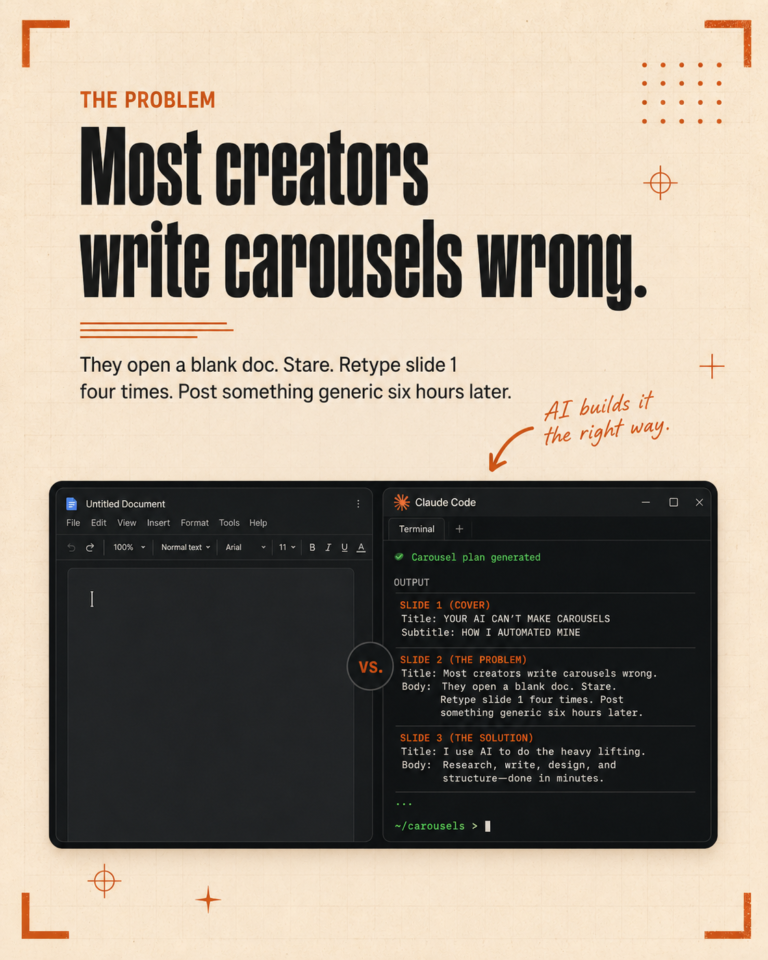
We built a different approach. Using Claude Code skills, we run structured SEO audits that check every element we care about, page by page, in a fraction of the time. This post walks through exactly what our audit covers, how the skill works, and what we have learned about AI-assisted SEO over the past few months.
What our SEO audit skill actually checks
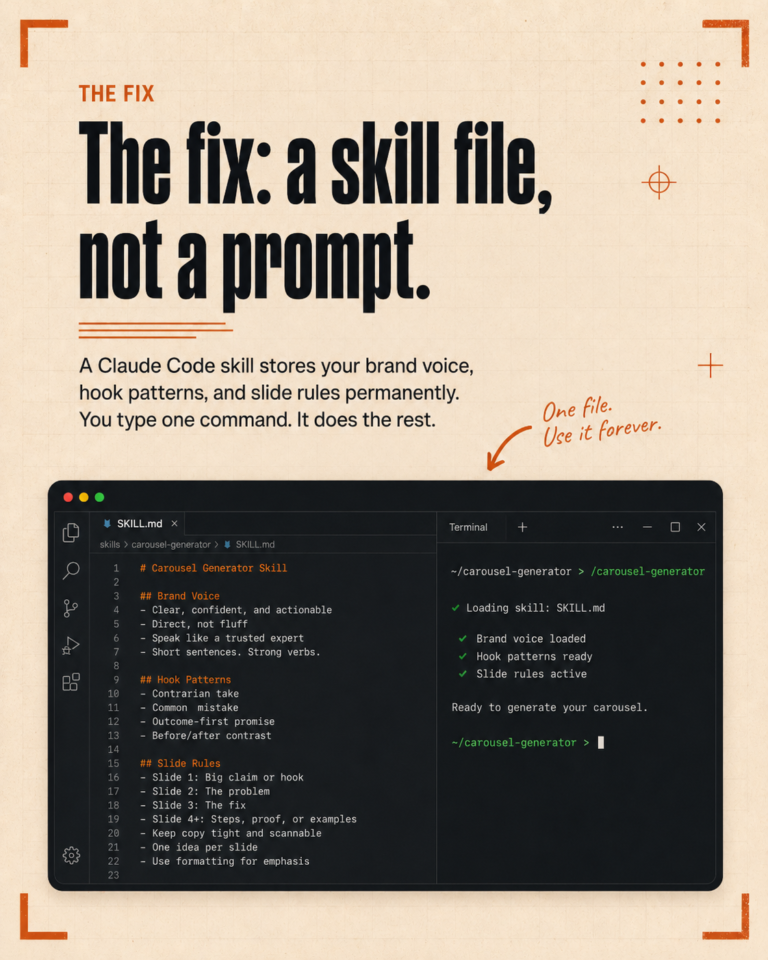
We built the audit as a Claude Code skill, which means it follows the same structured process every time. No steps get skipped because we got distracted or ran out of time. Here is what it covers:
Title tags and meta descriptions. Are they present? Are they the right length? Do they include the target keyword? Are any duplicated across pages? Duplicate meta descriptions are one of the most common issues we find, and most site owners have no idea they exist.
Heading structure. Does the page use a single H1? Do the H2s and H3s follow a logical hierarchy? Are keywords worked into headings naturally? We see a lot of sites where pages have multiple H1 tags or skip heading levels entirely. Search engines use heading structure to understand content organization, and messy headings send confusing signals.
Internal linking. This is a big one. Are pages linking to each other where it makes sense? Are there orphan pages with no internal links pointing to them? Blog posts are the worst offenders here. Most small business blogs have posts that link nowhere and nothing links to them. That is wasted authority.
Image optimization. Do images have descriptive alt text? Are file names meaningful or just IMG_4523.jpg? Are images sized appropriately or are they 4MB files being displayed at 300 pixels wide?
Schema markup. Does the page have structured data? Is it the right type for the page? A blog post should have Article schema. A service page should have Service or LocalBusiness schema. A lot of sites have no schema at all, which means they are leaving rich snippet opportunities on the table.
URL structure. Clean, descriptive URLs with keywords. No unnecessary parameters or session IDs. No excessively deep nesting.
Content quality signals. Is the content matching the search intent for the target keyword? Is it thin compared to competitors? Are there obvious content gaps where the page should go deeper?
How the skill runs
The audit skill is a markdown file that Claude Code reads and follows step by step. We point it at a URL, and it works through the checklist methodically.
For each page, the skill produces a structured report: what is working, what needs fixing, and specific recommendations. Not vague suggestions like “improve your meta descriptions.” Actual specifics like “this meta description is 178 characters, cut it to under 160, and include the keyword ‘local bakery catering’ in the first half.”
We also have a separate schema markup skill that generates ready-to-use JSON-LD for any page type. When the audit flags a missing schema, we can immediately generate the correct markup. Blog post? Article schema with author and date. Service page? Service schema with provider details. FAQ section? FAQPage schema that can earn those expandable results in Google.
The whole process for a single page takes about 5 minutes. A 15-page site takes under an hour, including the writeup. Compare that to a manual audit or waiting two weeks for an agency to deliver one.
What we consistently find on client sites
After running these audits on multiple sites, patterns have emerged. The same issues show up again and again:
- Duplicate meta descriptions across 40-60% of pages. Usually because the site template has a default description and nobody changed it per page.
- Missing schema markup entirely. Most small business sites have zero structured data. This is low-hanging fruit that takes 10 minutes to fix.
- Blog posts with no internal links. The blog exists as an island, disconnected from the rest of the site. Each post should link to at least 2-3 relevant pages.
- Title tags that are too long or too generic. “Home” or “Welcome to Our Website” as a title tag is surprisingly common.
- Images without alt text, or alt text that just says “image” or “photo.”
None of these are complicated to fix. The problem is that nobody checks for them until something stops ranking.
Why AI-assisted audits catch more issues
This is the part that surprised us. We expected the AI audit to be faster. We did not expect it to be more thorough.
When you audit manually, you are fighting fatigue. By page 8, you start skimming. You check the title tag and meta description, skip the heading structure, glance at schema, and move on. The checklist stays consistent in theory, but your attention does not.
The Claude Code skill checks every item on every page with the same level of detail. Page 1 gets the same scrutiny as page 30. That consistency matters. We have caught issues on page 15 that we absolutely would have missed manually because they were subtle: a heading hierarchy that skipped H3 entirely, an image buried in the footer with no alt text, an internal link pointing to a 301 redirect instead of the final URL.
The other advantage is keyword gap analysis. Claude Code can compare a page’s content against what is ranking for the target keyword and identify where the page is thin. Not just word count, but actual topic coverage. “Your competitors all cover pricing and FAQs on this service page. You do not.” That kind of gap analysis is hard to do manually without reading every competitor page side by side.
What the audit does not replace
We should be honest about the limits. The skill does not replace a full technical SEO crawl. It does not check page speed metrics, crawl errors, redirect chains across hundreds of pages, or server-side configuration. For that, you still want a tool like Screaming Frog or Sitebulb.
It also does not replace strategic SEO thinking. The audit tells you what is wrong. Deciding what to prioritize, how to structure a content strategy around keyword clusters, or whether to consolidate thin pages: that is still human decision-making.
What the skill does is handle the methodical, repeatable part of an audit quickly and consistently. The part that eats up time and attention. That frees us to focus on the strategic recommendations that actually move the needle.
Try it yourself
If you are running a marketing agency or managing websites for clients, SEO audits should be a regular part of your workflow. Not just when something breaks, but as a quarterly check-in at minimum.
We run these audits as part of our client work and as a standalone service. If you want to see what a Claude Code-powered audit looks like on your site, book a free call and we will walk through it live.