Email marketing is one of those tasks that should be simple but never is. The strategy is straightforward: send the right message at the right time to the right person. The execution is where it falls apart. Writing seven emails for a welcome sequence, keeping the voice consistent, making each one feel personal, and doing that for multiple clients. It adds up fast.
We started using Claude Code for email sequences about three months ago. It took some trial and error to get the output where we wanted it, but the process we have now consistently produces sequences that clients approve with minimal edits. Here is how it works, what we have learned, and where AI-written emails still need a human touch.
Why email sequences work well with Claude Code
Email sequences have a natural structure. Welcome sequences follow a pattern: deliver, connect, educate, convert. Nurture sequences build trust over time. Re-engagement sequences acknowledge absence and offer a reason to come back. That predictability is exactly what makes them a good fit for AI.
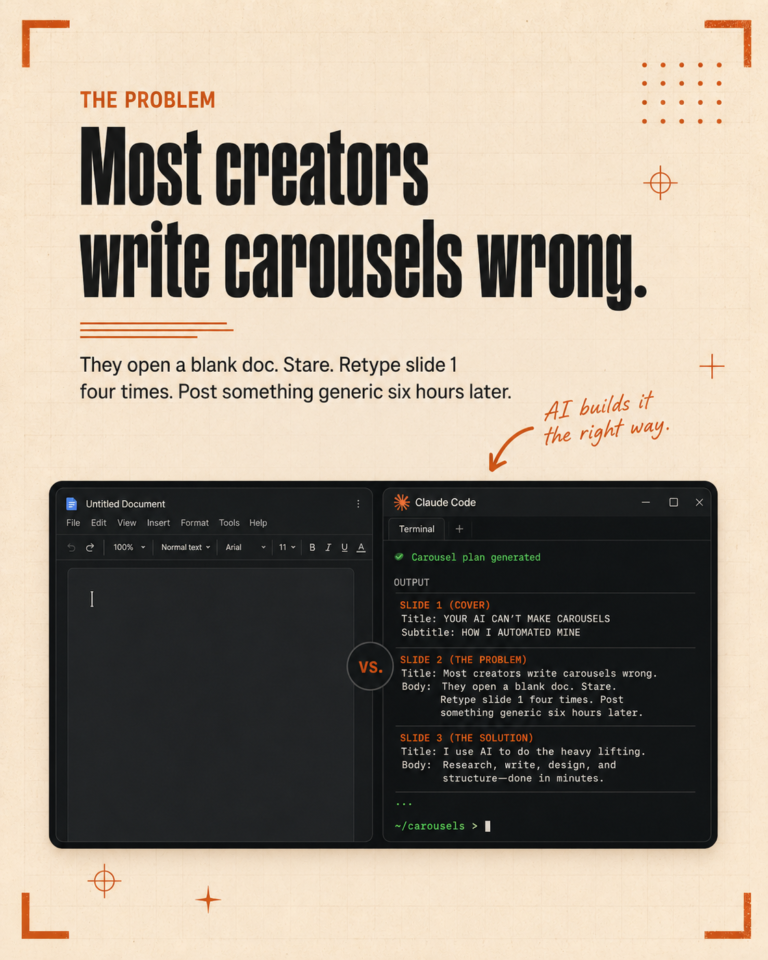
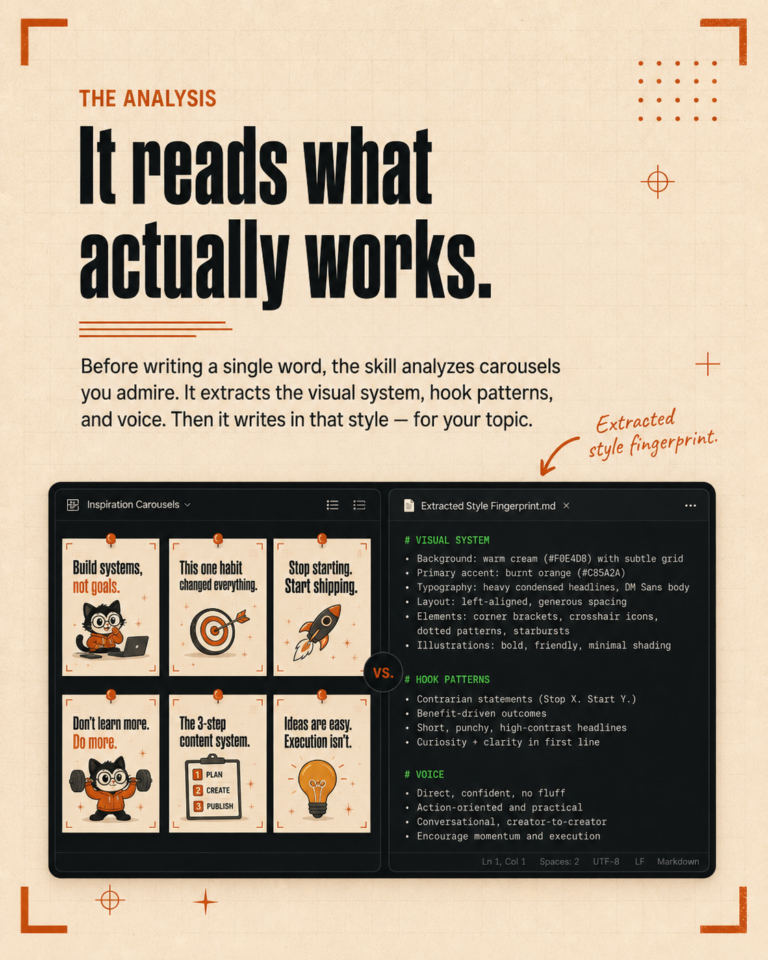
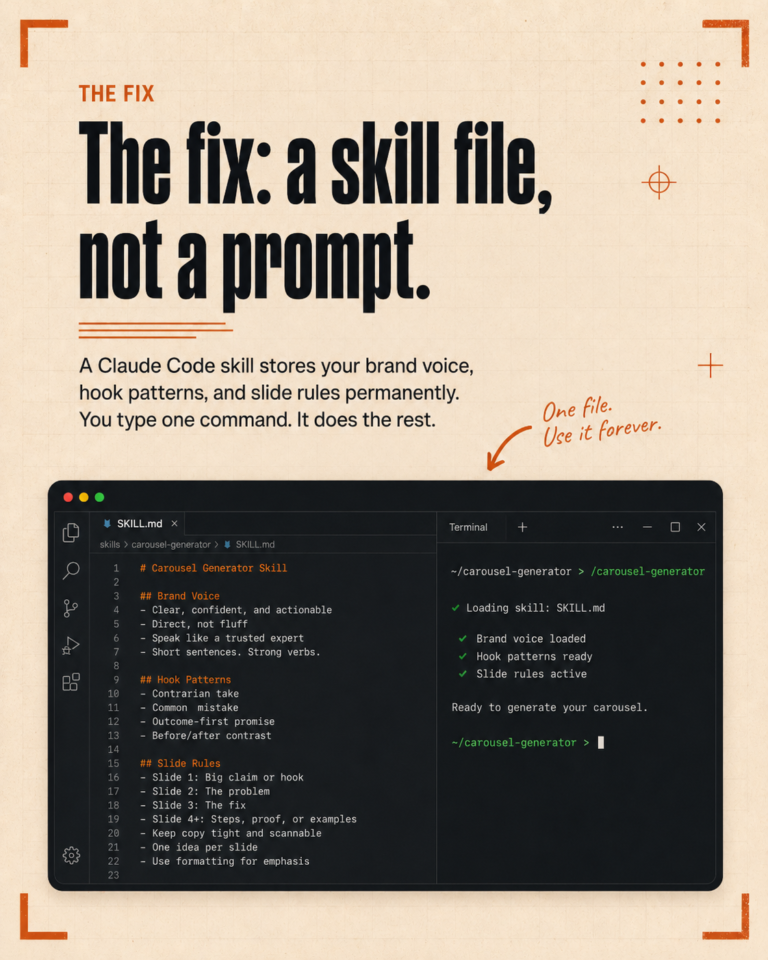
The part that makes Claude Code specifically useful (as opposed to any AI tool) is the context layer. When we write emails for a client, Claude Code reads their CLAUDE.md file, which contains their brand voice, their audience details, their offers, and their communication style. The first draft already sounds like the client, not like a generic marketing email.
Compare that to writing emails in a tool that has no idea who your client is. You spend the first 10 minutes of every session re-explaining the brand, the audience, the tone. Then you hope the tool remembers all of it for the next email in the sequence. With Claude Code, that context is loaded automatically every time.
Welcome sequences: the first impression
Welcome sequences are the highest-leverage email you can write for most businesses. Someone just signed up, opted in, or purchased. They are paying attention right now. The welcome sequence sets the tone for every email that follows.
Here is the structure we typically use:
- Email 1 (immediate): Deliver what was promised (freebie, confirmation, access). Keep it short. Set expectations for what comes next.
- Email 2 (day 2): A quick win. Something the reader can do or learn in 5 minutes that makes them glad they signed up.
- Email 3 (day 4): A story or real example. Something that builds connection and shows understanding of their situation.
- Email 4 (day 7): Address the biggest objection. Whatever usually stops people from buying or booking, tackle it directly.
- Email 5 (day 10): The offer. Clear, specific, with a reason to act now.
Claude Code generates the full sequence with subject lines, preview text, body copy, send timing, and CTA placement. Each email stays in the same voice because the skill references the same brand guidelines throughout.
The part that consistently needs human editing is email 3, the story email. AI-generated stories tend to feel constructed rather than lived. We always flag that email for the client to replace with a real story from their experience. A genuine “here is what happened to a customer last month” will always outperform a fabricated scenario.
Nurture sequences: staying useful without being annoying
Nurture sequences are harder to write because there is no clear end point. The goal is to keep the subscriber engaged and moving toward a purchase or booking, without being pushy or repetitive.
Our approach is to alternate between three types of emails:
Value emails that teach something useful. A tip, a framework, a common mistake to avoid. These should be genuinely helpful even if the person never buys anything.
Perspective emails that share an opinion or insight. Not “5 tips for better marketing” but “here is something most people get wrong about marketing, and here is why it matters.” These build trust by showing the sender thinks independently.
Social proof emails that share results, testimonials, or case examples. Not a hard sell, just evidence that the work produces real outcomes.
Claude Code handles the value and perspective emails well. It can pull from the client’s content pillars and expertise areas to generate emails that feel substantive. Social proof emails, like story emails, need real examples from the client. We generate the structure and ask the client to fill in specific details.
Re-engagement campaigns: the hardest to get right
Re-engagement emails go to subscribers who have stopped opening. This is where most AI-written emails fail because the default tone is either too casual (“we miss you!”) or too corporate (“we noticed you have not engaged with our recent communications”).
The approach that works for our clients is direct honesty. Something like: “You signed up a while ago and have not opened much since. Here is what we have been working on. If it is not useful, no hard feelings, you can unsubscribe below.”
That kind of straightforward messaging is hard for AI to produce unprompted. It requires specific instructions in the skill to avoid the default patterns. We include rules like “no guilt language,” “no excessive enthusiasm,” and “acknowledge reality, do not pretend.” Those constraints produce better output than asking for a “warm re-engagement email.”
The re-engagement sequence we use is typically three emails:
- Email 1: “Here is what you have been missing” with the best content from the past month.
- Email 2: A specific, valuable resource (guide, template, video) available only through the email.
- Email 3: Honest “stay or go” email. Clear unsubscribe option. No tricks.
Subscribers who re-engage after this sequence tend to be more active than before. And cleaning out the ones who do not improves deliverability for everyone else.
Tips for making AI-written emails sound human
After writing dozens of email sequences with Claude Code, we have identified the patterns that make emails sound obviously AI-generated and the fixes that solve them:
Vary sentence length. AI defaults to medium-length sentences throughout. Mix in short ones. Then follow with a longer sentence that takes its time developing an idea. That rhythm sounds like a person writing.
Cut the transitions. “Additionally,” “furthermore,” “moreover” are AI tells. Real emails just start the next thought. If the connection between paragraphs is not obvious without a transition word, the paragraphs might not belong next to each other.
Use one CTA per email. AI tends to sprinkle calls to action throughout. One clear CTA per email, placed near the end, performs better and reads more naturally.
Remove the summary paragraph. AI loves to end with “in summary” or “to recap.” If someone read the email, they do not need a summary. End with the CTA or a final thought, not a recap.
Read it out loud. This is the simplest and most effective check. If you would not say it in a conversation, it does not belong in an email. If it sounds like a press release, rewrite it.
When to write emails yourself
Not everything should be AI-generated. Launch emails for a new product should come from the founder in their real voice. Apology emails should be written by a person. We use Claude Code for the repeatable, structured sequences where consistency matters, and write the personal ones ourselves.
Want help building email sequences for your business? Book a free call and we will map out the right sequence for your audience.