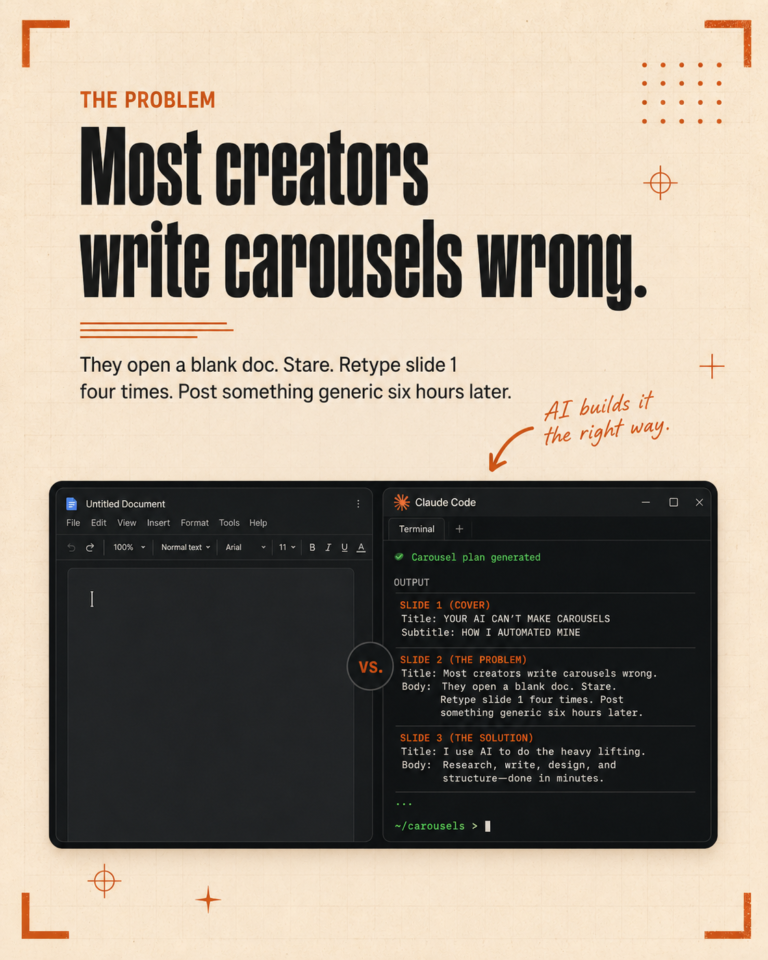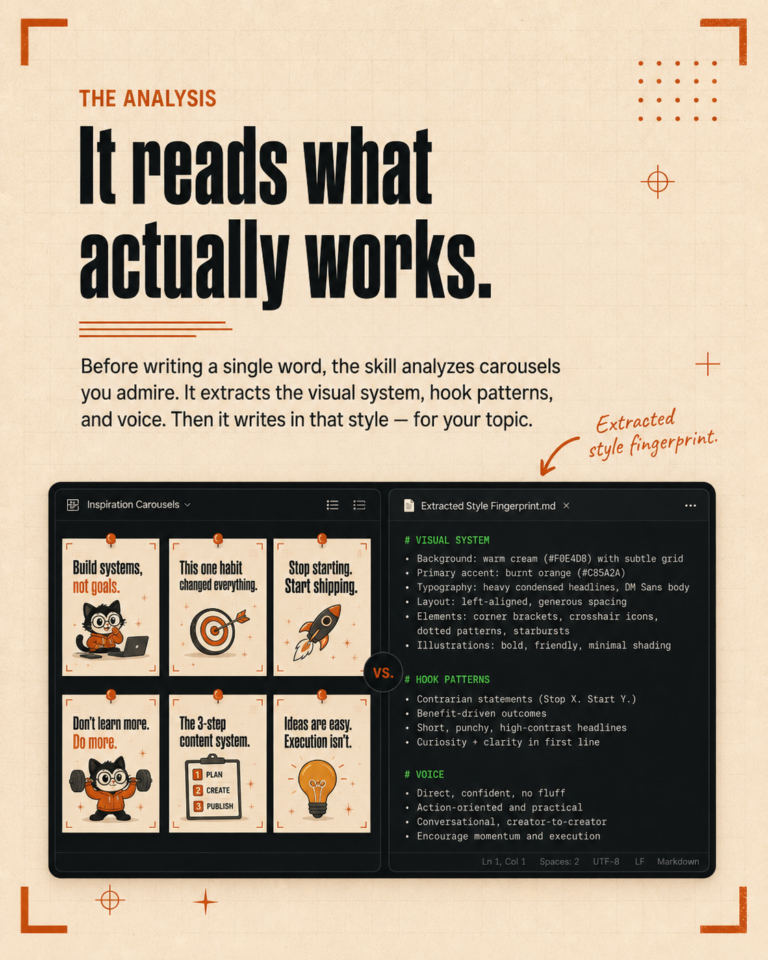
Most articles about AI marketing tools talk about ChatGPT, Jasper, Claude.ai, or Notion AI. Those are all good for one-off tasks. What none of them do is read your entire project, remember your brand voice, and build the same output the way a junior marketer would after six months of training.
Claude Code does that. It is the same model family behind Claude.ai, but it runs in your terminal, on your files, with full project context. We use it to run our entire marketing operation. This is the actual workflow, not the demo version.
What Claude Code is, in one paragraph
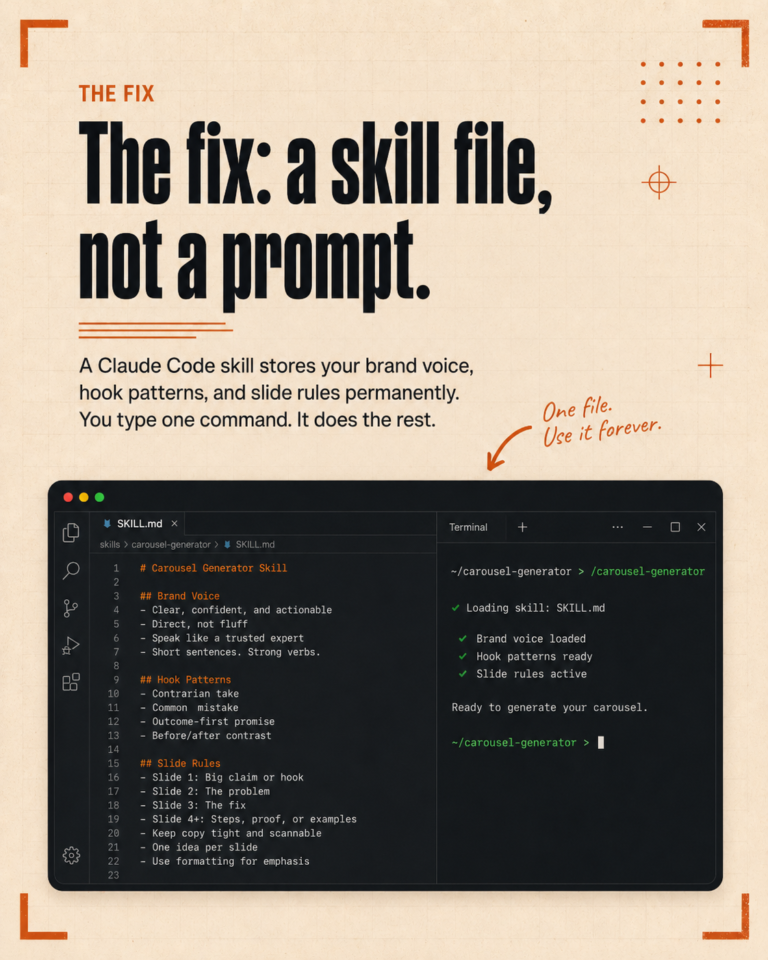
Claude Code is a command-line tool from Anthropic. You install it once, point it at a project folder, and it can read every file in that folder. You write a single configuration file called CLAUDE.md that tells it who the client is, what the brand voice sounds like, and what the rules are. From that point on, every task you give it inherits that context. You do not have to paste the brand guidelines into a chat. The AI already knows.
The folder structure we use
Each client we work with has a folder inside one big marketing operating system repo. Inside that folder are a few standard files. A CLAUDE.md with the rules. A style guide. A content pillars file. A past content folder with the captions and posts we have already shipped. An analytics folder with what has worked and what has not.
When we run a skill like “generate weekly content” or “audit our funnel,” Claude Code reads the client folder and outputs work that fits the brand without being reminded of it. The setup is the slow part. After that, the leverage compounds.
What a real session looks like
A typical Monday for us starts with opening the terminal and typing two commands. The first triggers a content engine run on whatever video transcript we recorded last week. It outputs the YouTube description, the LinkedIn long-form post, the TikTok and Instagram captions, the blog draft, and a Twitter thread. The second command schedules everything to the right platforms at the right times.
Mid-week, we run a competitor scout that pulls fresh data from the brands we track and writes a one-page report. On Friday, the audit skill reviews everything we shipped, flags the posts that underperformed, and rewrites the weakest ones for next week.
None of these scripts existed before we built them. We described what we wanted in plain English, Claude Code built it, and now we just run it.
Where it actually saves time
The big time savings are not in the writing. ChatGPT can write a caption fast. The big savings are in the parts that come before and after the writing. Knowing the brand. Remembering past content so we do not repeat ourselves. Pulling the right file from the right folder. Posting to the right platform with the right hashtags. Tracking what worked.
Those are the workflow tasks. Claude Code handles them because it can actually see your files, run scripts, and string steps together. A chat tool cannot.
Where it does not help
Claude Code is not magic. The first hour with it does nothing useful. You have to write the CLAUDE.md file, install a couple of skills, and figure out how you want your folders organised. If you skip that setup, the output is the same generic AI work you would get from anywhere else.
It also is not the right tool for someone who wants to type a prompt and walk away. The whole point is that it lives in your project. You have to want a system, not just an assistant.
Who this is for
If you run marketing for a small business, or you are a solo consultant who handles multiple clients, this is the tool that will save you the most time. If you are part of a large marketing team with a heavy enterprise stack, the value is harder to capture because your tools are already integrated. The leverage shows up most clearly for the operator who is doing everything herself.
If that sounds like you and you want to see what this could look like for your work, book a free call and we will walk through how a Claude Code system would fit your operation.