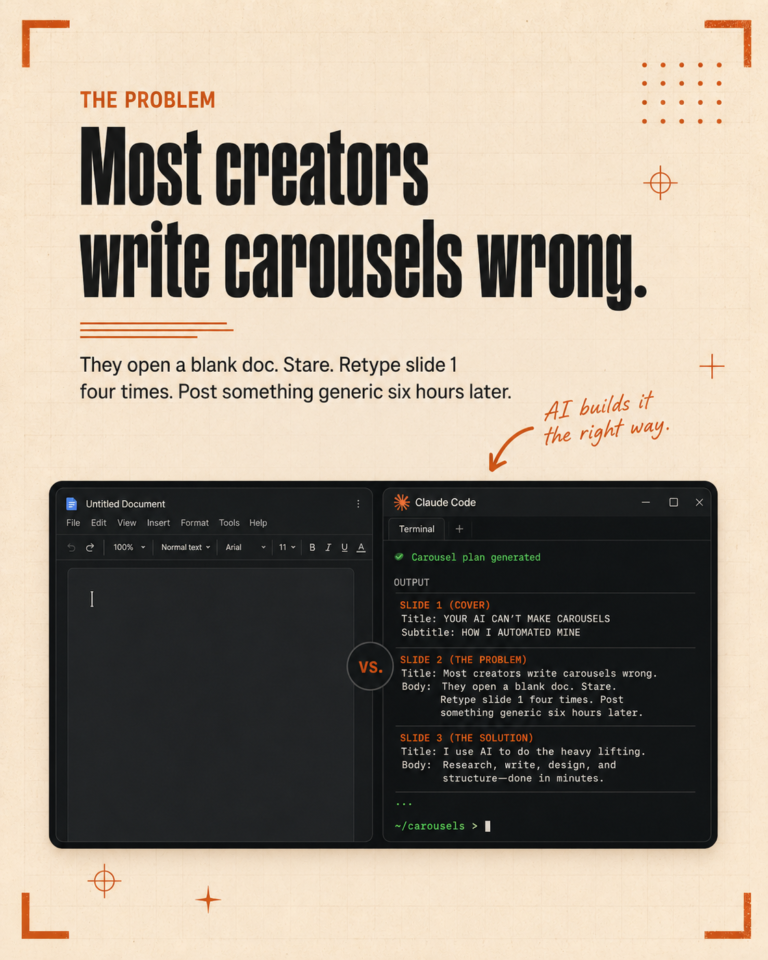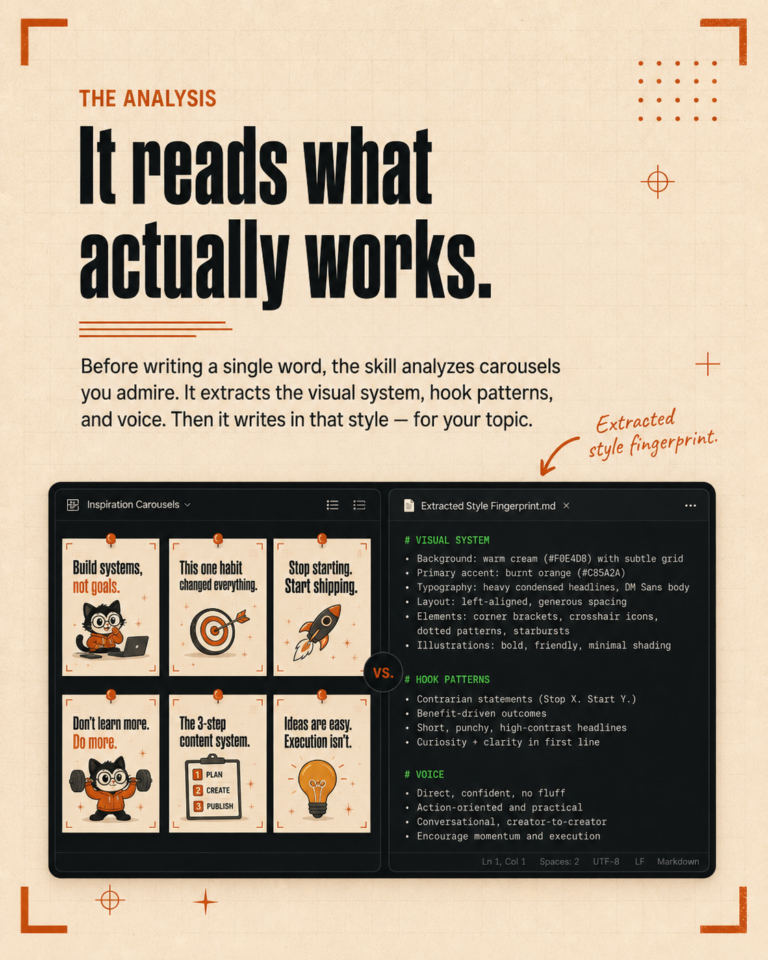
Most teams that pick up Claude Code start with chat. They open a project, ask a question, get an answer, close the tab. After a week they wonder why this is different from the chat tool they already had.
The answer is skills.
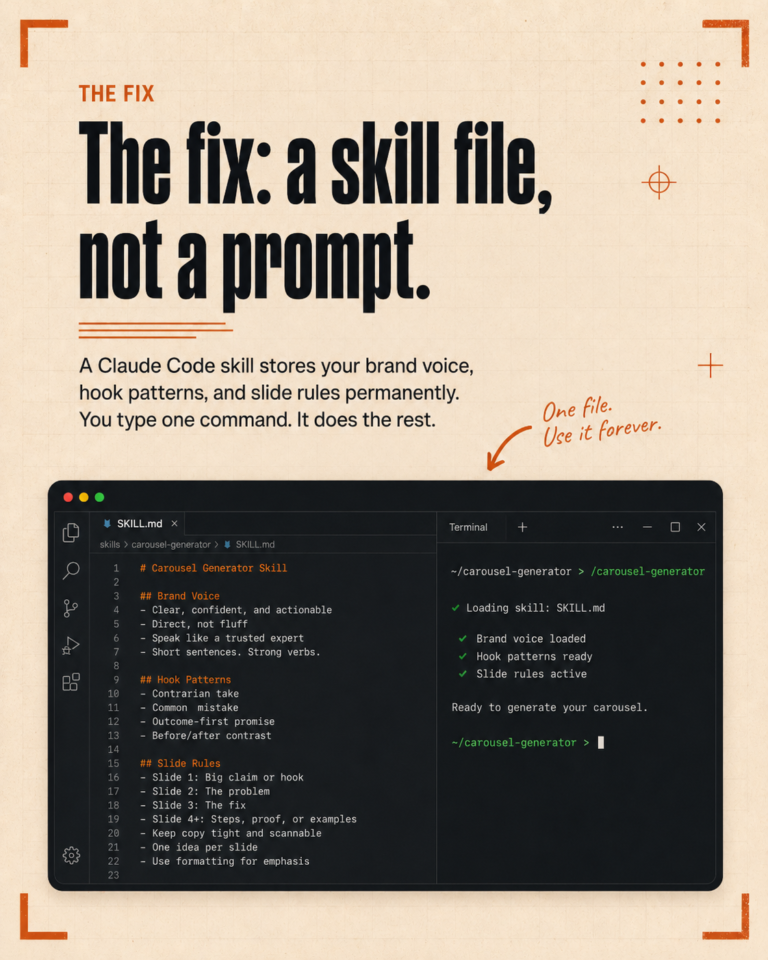
A Claude Code skill is a markdown file that turns a repeated marketing task into a one-command workflow. We use them every day at The Igniting Studio. Here is how they actually work, the ones we run most, and the small rules that keep them honest.
What a Skill Actually Is
A skill is one markdown file in your project. The top of the file tells Claude when to use it. The body tells Claude what to do, step by step. There is no plugin to install. No subscription. Just a file.
The file lives alongside your client folders. When you ask Claude Code to do something the skill description matches, it loads the file and follows the steps. When you do not, it ignores it.
This is the part that surprises people. It looks too simple to matter. It does matter. The simplicity is the point.
The Skills We Run Most
A handful of skills do most of the work in our studio. They are not the most clever. They are the ones we use every week.
weekly-content generates a full week of social media posts for any client. It reads the client folder, the brand voice file, the content pillars, and the past month of posts. It writes the week in the right format for the right platforms.
video-captions takes a transcript or a video file and writes captions for five platforms. Each caption respects the platform rules and the brand voice. No mirror of the video. No banned words.
competitor-audit runs an Apify scrape on a competitor handle and writes a structured report. We use it before a strategy call.
monthly-marketing-report pulls the month of data and writes a short internal recap. We send it to ourselves on the first of the month.
How We Write a New Skill
The pattern is always the same. We catch ourselves doing the same task twice. We open a new markdown file. We write what we did, in plain language. We add the rules that make the output good. We add the failure modes we already hit. We save.
The next time the task comes up, the skill triggers. If it gets it wrong, we edit the file. The file is the lesson.
This loop is how a marketing system gets built. Not by planning the whole system in advance. By writing it as you discover it.
What Makes a Skill Bad
The most common failure is a skill that tries to do too much. A skill that handles content, scheduling, reporting, and competitor research in one file is not a skill. It is a folder of unrelated work pretending to share a trigger.
Keep one skill to one job. If you need two jobs, write two skills.
The second failure is a skill with no examples. Claude is good at following structure. It is great when you give it real samples of what good looks like. Three real past outputs in the skill file beats two pages of instructions.
Where Skills Sit in a Marketing System
Skills are the verbs of the system. Client folders are the nouns. The agency runs on the combination.
A client folder holds the brand voice, the past content, the style guide, and the strategy. A skill says what to do with that information. The two together produce work in the right voice, on time, without rework.
This is the part that does not fit into a chat. A chat starts from zero every time. A folder holds the brand. A skill holds the workflow. Claude Code is the runtime where they meet.
The Practical Way to Start
Pick one task you do every week. Write a markdown file that says how you do it. Save it in a folder called skills. Open Claude Code in that folder. Ask it to do the task. See what comes back. Edit the file based on what was wrong.
Run the loop three times. By the third run, the output is usable. By the tenth run, the task takes a minute instead of an hour.
This is the boring real version of what AI for marketing looks like in practice. Not a fancy interface. A markdown file and a folder.
Where to Go Next
If you want help setting up your first skill or auditing the ones you have, we run short setup calls for small teams that want a working system in one afternoon.