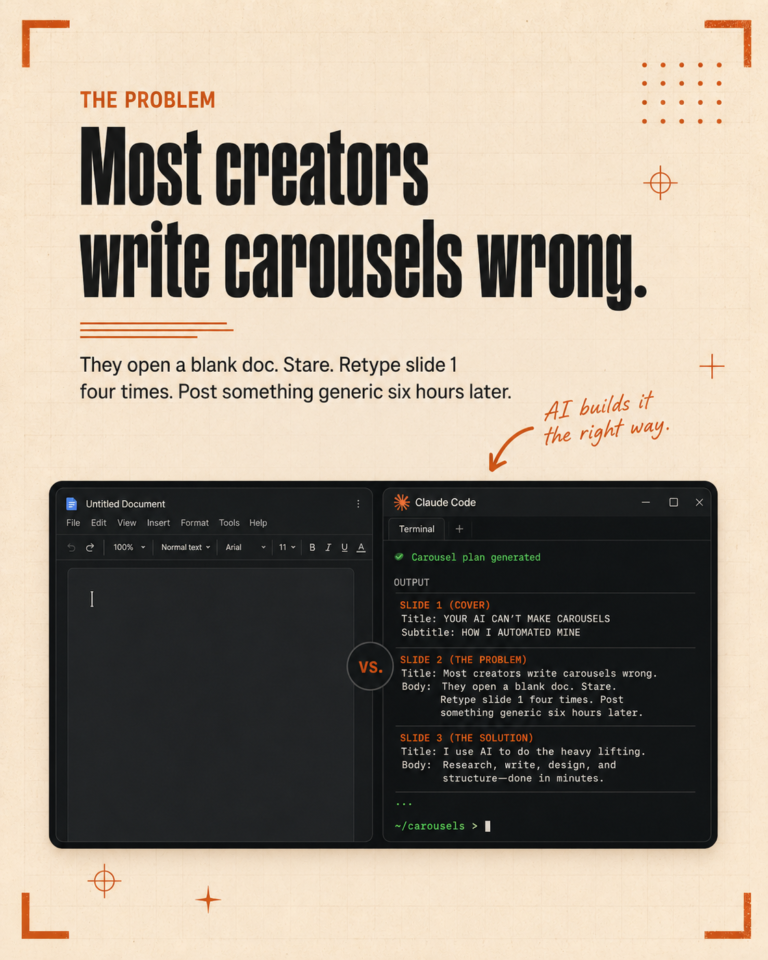
The phrase “AI marketing agency” is used by two very different kinds of businesses. The first is a traditional agency that has bolted AI tools onto an existing process and rebranded. The second is an agency that has rebuilt the operation from the ground up so AI is the engine, not the trim. The work feels different. The price feels different. The outcome feels different.
We run the second kind. This is what that actually looks like in 2026.
The operating model is different
A traditional agency hires people, charges retainers, and scales by adding heads. The marginal cost of a new client is roughly the cost of a new account manager and some specialist hours.
An AI-native agency invests in systems first, people second. The marginal cost of a new client is the time it takes to onboard them into the system, which is mostly automated. Once onboarded, the cost of running the work each month is small.
This is why an AI-native agency can charge less per client and still earn more than a traditional one with the same team size.
The work is different
At a traditional agency, a typical week for a junior is gathering brand context, pasting it into a brief, writing first drafts, sending them up for review, and iterating. At an AI-native agency, those steps are compressed into a workflow that the AI runs in minutes. The human time goes into the parts that matter. Strategy, judgment, the half-sentence change that makes a campaign land, the conversation with the client that surfaces what they really need.
The work is not less skilled. It is just more concentrated on the parts where human skill actually shows up.
What we actually do for clients
We do not sell content. We sell a system that produces content, plus the strategy on top of it.
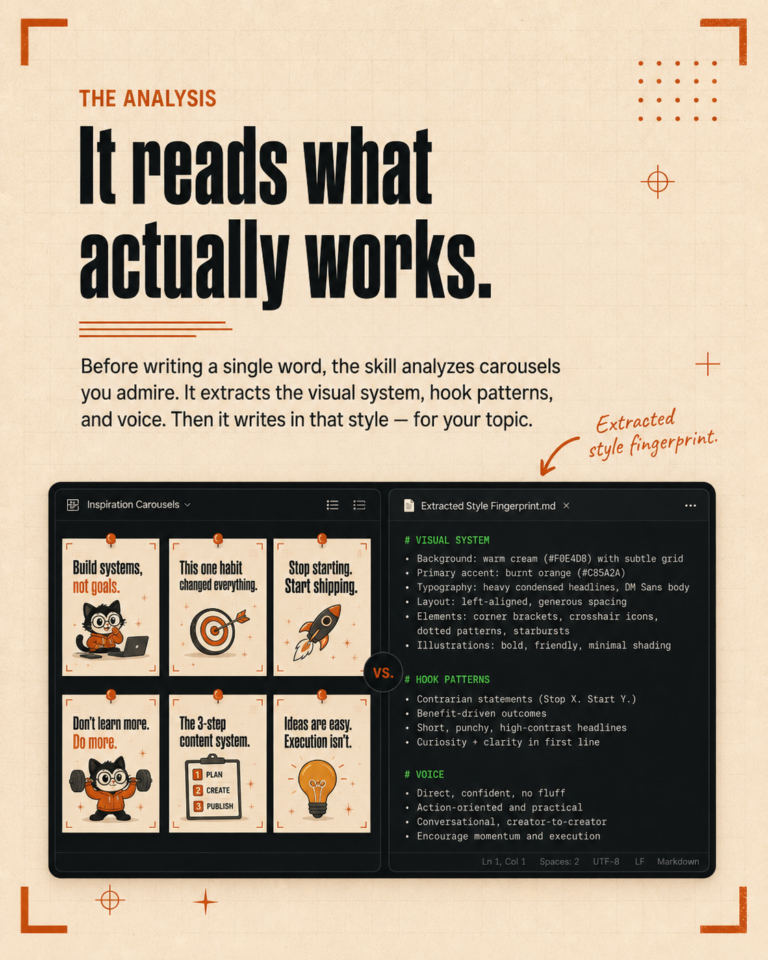
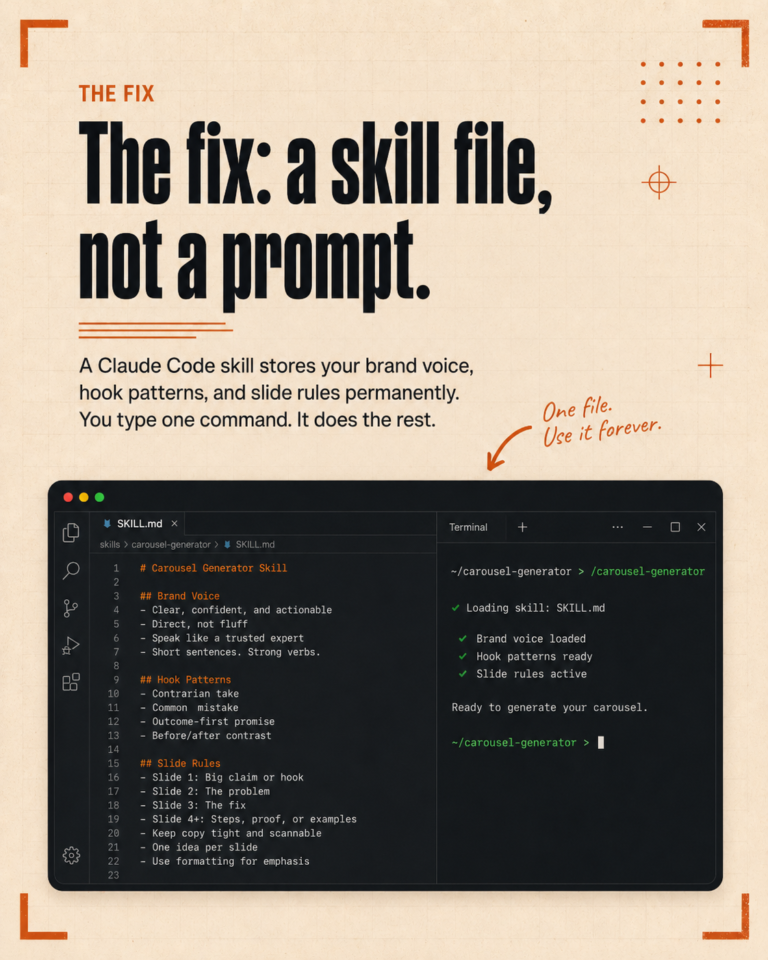
A typical client engagement starts with a setup phase. We build their CLAUDE.md, their style guide, their content pillars, their folder structure. We hook up their scheduler, their blog, their analytics. We run the first month of content with them watching so they see how the system works.
After that, the system runs. We oversee, we adjust, we steer. They get more content than a traditional agency would deliver at the same price, and the content sounds like them because the system was trained on their voice from day one.
What our team looks like
Smaller than people expect. The AI handles the work that used to require a junior copywriter, a junior designer, a scheduler, and a reporting analyst. The humans on our team do strategy, voice, oversight, and client relationship.
This is not a story about replacing people. It is about a different kind of team. The team is small because the system is doing most of the work that does not actually require human judgment.
What we do not do
We do not promise to replace the marketing team for a 200-person company. The AI-native operating model fits best at the SMB end. Solo founders, small teams of two to twenty, agencies who want to build their own AI stack. At enterprise scale, the existing systems and approval chains slow the AI advantage to a crawl.
We do not pretend the AI does everything. Strategy, taste, brand judgment, client relationship are all human. The AI is the leverage layer underneath.
We do not sell a generic chatbot dressed up as a service. There is no chatbot. There is a system that runs your marketing.
How the pricing works
Traditional agencies price on time. Hours, retainers, salaries to cover. AI-native agencies price on outcome and on system value. The setup is a one-time fee because building a working AI system for a brand takes real work. The ongoing cost is small because once the system is built, it runs.
We price the install once. The ongoing oversight is hourly or project-based. Clients are surprised by how low the ongoing cost is compared to a traditional retainer for the same volume of output.
The honest limits
This model only works for clients who are willing to commit to one platform stack, share enough context for the system to work, and let the system run instead of micro-managing every output. About a third of prospects are not a fit for this reason.
It also requires the agency owner to be comfortable building systems. If you are not technical-curious, you will struggle to run an AI-native agency. The setup work is not optional.
Where this is going
Most agencies will end up somewhere on this spectrum within five years. The AI-native operating model is more efficient per client and the gap will widen as the tools get better. The agencies that adapt early get a head start on the system and a brand of being the one that knows what they are doing.
If you are a founder or marketer curious what an AI-native agency could do for your brand, book a free call and we will walk through what a real engagement looks like.