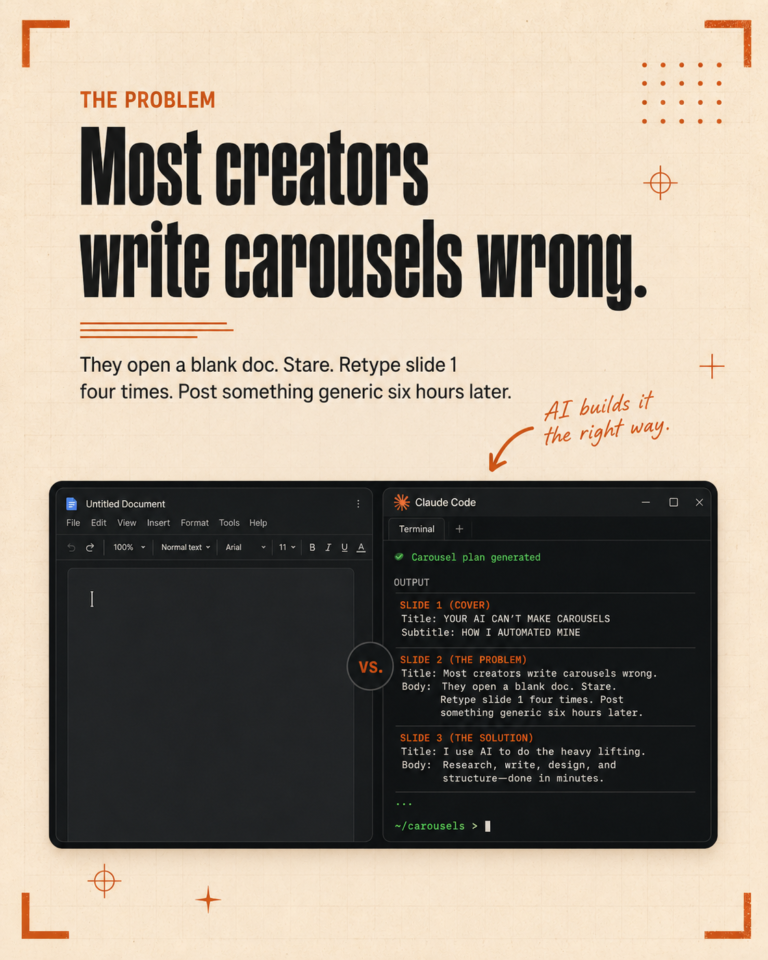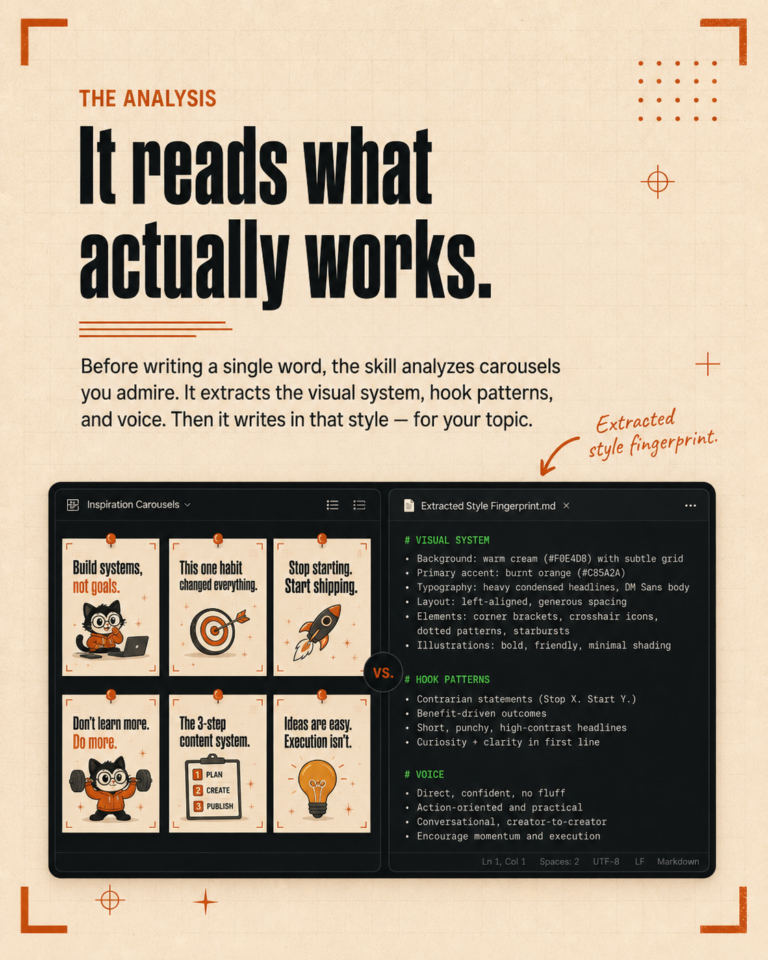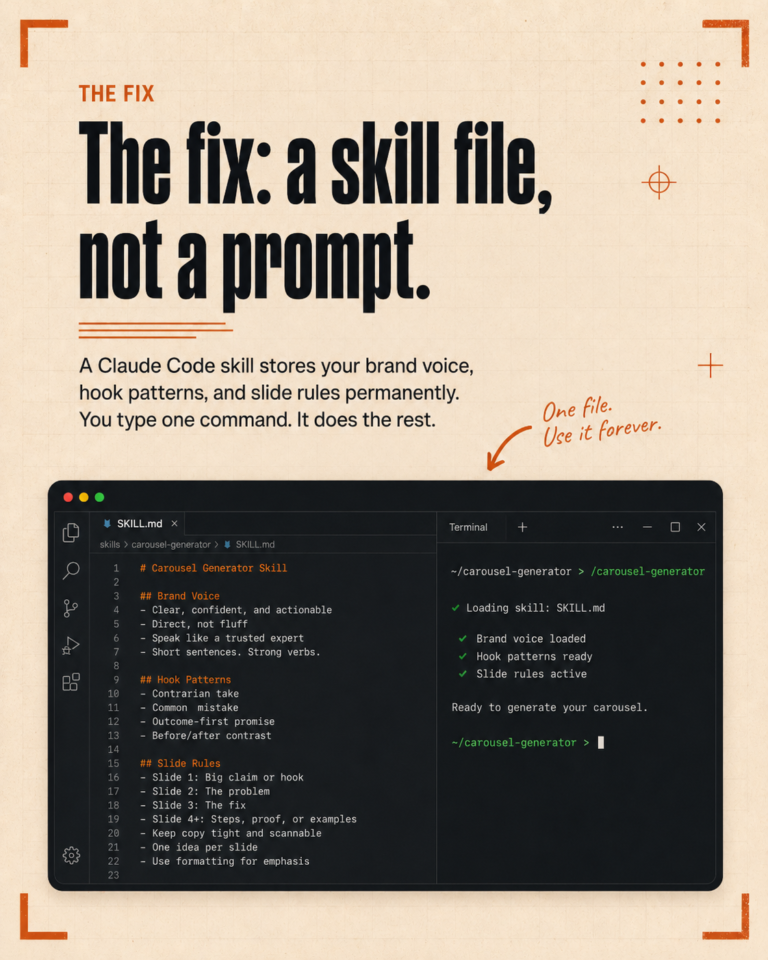
Inside every Claude Code project there is one file that does more work than the rest combined. It is called CLAUDE.md. It sits at the root of the project.
Most marketing teams using Claude Code never write a good one. They paste a vague description, save the file, and wonder why the model keeps doing the wrong thing.
A good CLAUDE.md is the difference between a folder that runs your marketing and a folder that wastes your time. Here is how we write ours.
What the CLAUDE.md File Actually Does
When you open Claude Code in a folder, the model reads CLAUDE.md before doing anything else. The rules in that file shape every reply, every output, every skill run.
It is your project constitution. If a rule is in CLAUDE.md, the model obeys it. If a rule is not in CLAUDE.md, the model invents its own behavior.
Most of the inconsistency teams complain about is not a model problem. It is a CLAUDE.md problem.
The Sections Every Marketing CLAUDE.md Needs
The hard rules. Things that must never happen. No em dashes. No banned words. No client names in public posts. No invented client testimonials. Each one a single line, clearly worded.
Voice and tone. Three sentences on the voice. The kind of words to use. The kind of words to avoid. The way the voice changes when shipping good news versus admitting a problem.
Project layout. Where client folders live. Where strategy documents live. Where past content lives. What goes where, with examples. This stops the model from creating files in random places.
Workflow rules. When to use a skill versus when to ask. When to draft versus when to ship. What approval looks like. What the model is allowed to do without asking.
Failure modes. The things the model has gotten wrong before, and the correction. Past tense, specific. Not in theory, in practice.
The Mistake Most Teams Make
The mistake is treating CLAUDE.md like a marketing brochure. Long paragraphs, soft language, aspiration over fact.
The model reads the file the same way it reads code documentation. Specifics work. Vagueness does not. The CLAUDE.md that says, write in a friendly, professional, helpful tone, does almost nothing. The CLAUDE.md that says, write the way Kata talks on her podcast, with full sentences, no jargon, and the occasional dry joke, does real work.
If you cannot read a rule and act on it without interpretation, the model cannot either.
The Right Length
A good marketing CLAUDE.md is between 100 and 400 lines. Shorter than that and you have not said enough. Longer than that and the model loses the important rules in the noise.
If your file is getting long, move the deep detail into smaller subfiles and reference them. A line that says, brand voice details in voice.md, beats five paragraphs of voice description in the main file.
Iteration Is the Whole Point
Your first CLAUDE.md will be wrong. Run the system for a week. Note every place the model got something wrong. At the end of the week, add or change the rules that would have prevented those failures.
This is the loop. Every CLAUDE.md gets better with use, because every wrong output is information. After a month of weekly edits, the file knows the studio. After a quarter, the file is the institutional memory of how the studio works.
That is the real magic. Not the model. The accumulated edits in a markdown file.
The Test for a Good CLAUDE.md
Hand the file to a contractor who has never worked with you. Ask them to read it and produce a piece of content in your voice. If they can do it from the file alone, the file is good. If they need to ask three questions first, those three questions are the next edit.
This test works because the model is the same kind of new colleague every time. Every new session is the contractor who just walked in. The CLAUDE.md is the onboarding doc.
What Happens When You Get It Right
When your CLAUDE.md is solid, the work output improves in a way that feels almost unfair. Skills produce on-brand content the first time. Reports use the right tone. Captions sound like you wrote them.
You stop fighting the model. You start trusting the output. The trust is what makes automation actually save hours.
If You Want Help With Yours
If you want a second set of eyes on your CLAUDE.md or a starter file for your studio, we run short setup calls.