SEO used to be a fight for ten blue links. In 2026 it is also a fight for AI-generated answers, featured snippets, and the responses inside ChatGPT, Gemini, and Claude. The work that wins on Google still matters. It is no longer enough.
We use Claude Code for SEO because it can do all the moving parts in one place. Keyword research, brief generation, on-page optimisation, internal linking, and the part most SEO tools ignore. Making sure your content is the kind that AI search engines actually surface.
What changed in SEO in the last twelve months
Google AI Overviews now appear on most informational queries. ChatGPT and Claude have built-in search and quote sources directly. People are increasingly typing tasks into AI tools instead of search engines. “Find me a marketing consultant who works with founders” instead of “marketing consultant near me.”
The implications are simple. Your content has to be readable by humans, indexable by Google, and structured in a way that AI search engines can extract and quote.
Keyword research with Claude Code
Traditional keyword research starts from a seed term and expands. That still matters. What has changed is that the AI search layer rewards entity coverage as much as it rewards keyword density.
We use Claude Code to do three passes on every topic. First, a standard keyword pull with search volume and difficulty. Second, an entity scan to find the topics and brands that should be mentioned alongside the keyword. Third, a question-mining pass that pulls the actual questions people ask about the topic on forums, Reddit, and AI chat tools.
The output is a brief that covers the topic the way an actual expert would, not the way a keyword tool says to.
Briefs that work for both kinds of search
A 2026-grade content brief has more than just keywords. It needs the primary keyword, a list of supporting terms, the entities that should appear, the questions the article must answer, and the structure that helps both Google and AI extract clean answers.
Clear H2s with question phrasing. Short, definitive sentences early in each section. Lists where they help, prose where they help more. Internal links that build topical authority. External links to authoritative sources.
Claude Code can produce this brief from a single keyword in about two minutes. The brief is the work. The writing is the easy part once the brief is right.
On-page optimisation without the bloat
Most on-page SEO advice still recommends keyword density targets and keyword in the first paragraph. That is fine but it is no longer enough. The pages that win now are the ones that answer the question completely, cite real sources, and have a clear structure.
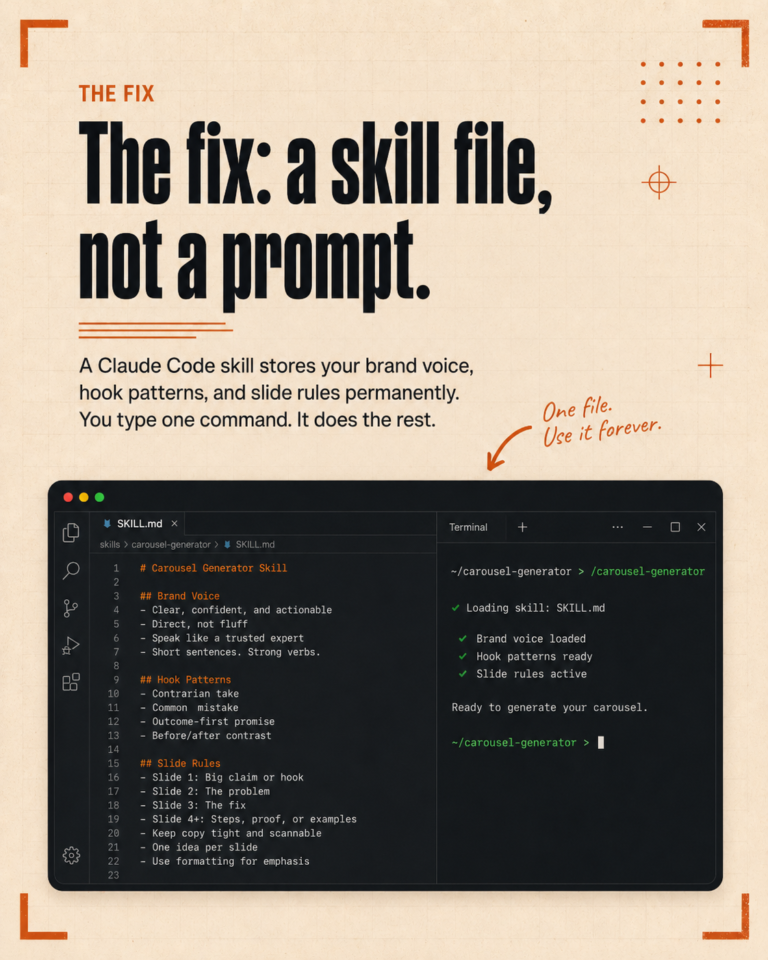
We run an on-page skill that reviews every draft against a 2026 checklist. Does the first paragraph define the topic. Does each H2 answer a real question. Are the headings phrased the way someone would search. Are there clear, quotable definitions in the first half of the post. Is the internal linking deliberate.
The skill takes about thirty seconds. It catches things a human would miss because the human gets attached to the prose.
Building for AI search citation
This is the new part. When ChatGPT or Claude answers a question, it pulls sources. Those sources are not random. The AI search layer rewards content that has clear definitions, named frameworks, and structured answers.
If you want your content to get cited in AI answers, write the kind of content that the AI can pull a clean quote from. Define your terms early. Name your frameworks. Give explicit answers in the first sentence of each section. The AI is looking for confident, structured information.
This also happens to be good writing for humans. There is no real trade-off here.
Internal linking and topical clusters
Topical authority still matters. The way you build it has not changed much. Pick a pillar topic. Build out cluster pages around it. Link from clusters to pillar and from pillar to clusters.
What has changed is that Claude Code can do this analysis across your whole site in one pass. We feed it the full sitemap, the existing internal links, and the new content we are planning. It outputs a linking plan that fills the gaps and avoids over-linking from any single page.
What we do not do with AI in SEO
We do not generate hundreds of low-effort pages. Programmatic SEO has its place but the bar for “useful unique content” has gone up. Google is better at spotting AI-spam pages now and AI search engines are even better.
We also do not rely on AI to choose pillar topics. That is a strategy call that needs human context.
Where this lands
SEO is still about being the most useful answer for a specific person searching for something specific. The tools change. The principle does not. Claude Code makes the principle cheaper to execute well.
If you want a free SEO audit on your top ten pages with a Claude Code-powered review, book a call and we will run it on a screen share.