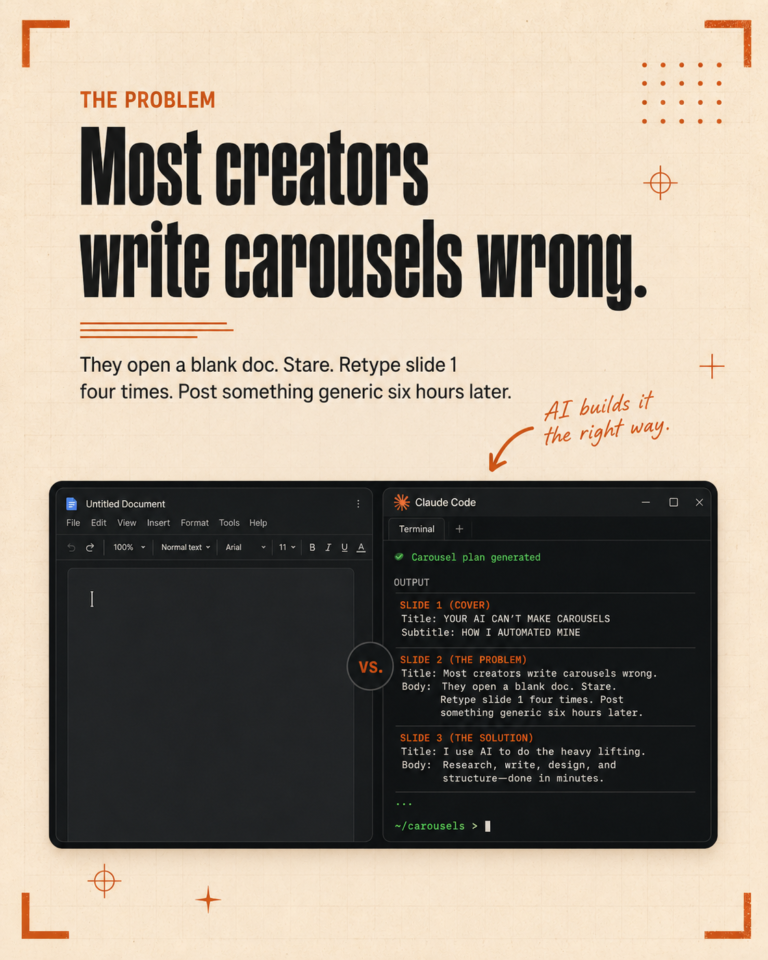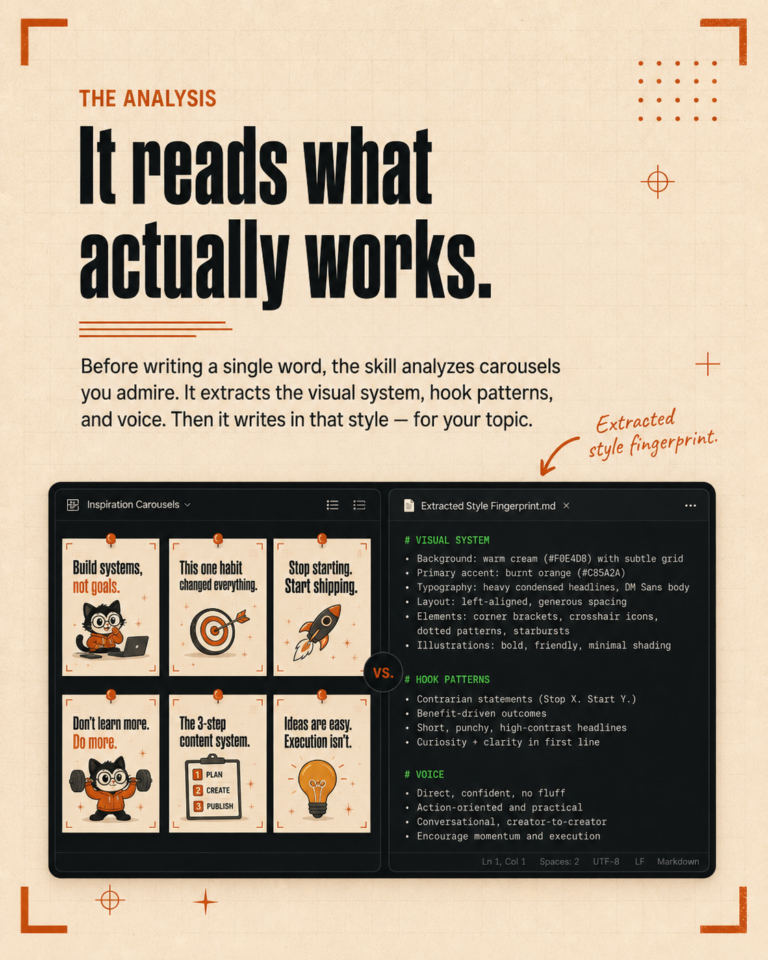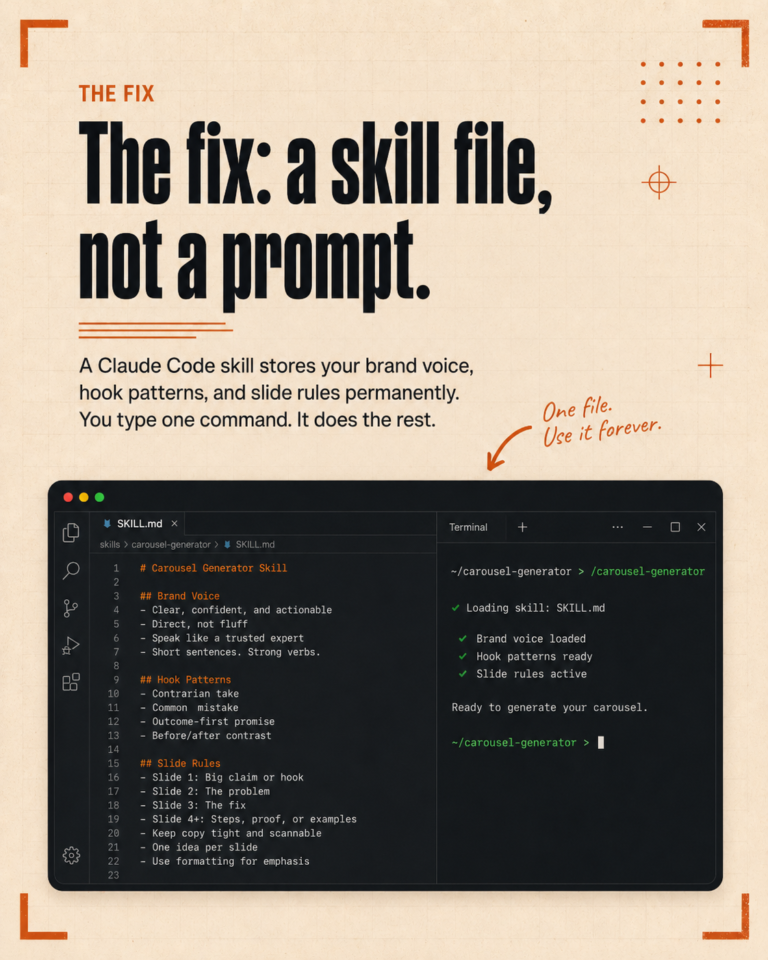
The promise of AI in marketing is more output. The risk is flatter output. Every post starts sounding the same. Every email reads like every other email. The brand voice that took a year to build dissolves in a week of automation.
The fix is not to slow down. It is to give the AI the right inputs before you ask for more output.
Here is how we automate marketing at The Igniting Studio without losing the voice of our studio or our clients.
The Real Reason AI Output Goes Flat
Flat output is almost never a model problem. The current models are good enough to match a real voice when they have the right reference material. The flatness shows up because most automations skip the reference material step.
A typical prompt says, write a post about X. The model has nothing to work with. It defaults to the average internet voice. That voice is the flat thing.
Give the model a brand voice file. Give it five real past posts that worked. Give it the words you avoid and the words you use. Now ask for the new post. The output sounds like you because you taught it what you sound like.
The Three Files Every Automation Needs
Brand voice file. One page. The voice in three sentences, the words to use, the words to avoid, the tone in different contexts, three examples of the voice done right.
Past work folder. Twenty real pieces of past content that represent the voice. Captions, emails, blog posts, scripts. Whatever you produce. Real, not curated.
Rules file. The hard constraints. No em dashes. No banned words. No client names in public posts. Specific formatting rules for each platform.
With those three files in place, automation produces voice-matched output. Without them, it produces the flat average.
What to Automate First
Start with the work where the rules and the voice are well defined and the volume is high. Captions, hashtags, repurposing. Posts you write every week. Reports you ship every month.
Avoid automating creative-direction work in the first month. Things like positioning, naming, the first draft of a launch. That work benefits from a chat session, not a script. The model is helpful but the human still needs to decide.
Once your repeatable work runs reliably on automation, you have time and clarity to do the creative direction yourself. The automation buys back the hours that go into the part that actually needs you.
The Loop That Keeps Voice Alive
Run the automation. Read the output. If something is off, do not edit the output. Edit the skill or the brand voice file. Run it again.
This loop is what keeps voice alive over months. Every correction lives in the source files. The next run benefits from the correction. The drift never compounds because every issue gets pushed back upstream.
Teams that edit outputs without updating the source files end up doing the same correction every week. That is the slow path to flat output. The fast path is to edit the source.
The Place Most Brands Get This Wrong
Most brands give their AI tool a one-line voice description. Friendly, professional, helpful. That is not a voice. That is a hat the model puts on for ten seconds.
A real voice description sounds like a person describing how a friend writes. It uses specific words. It names the habits. It bans the cliches. It shows what the voice does when something good happens and what it does when something bad happens.
If you cannot tell the difference between two brands by reading their voice files, the voice files are not specific enough.
What Stays Human
Three things stay human in our studio.
Final approval on any client-facing content. The skill drafts, the human signs off. Always.
Strategy calls and discovery work. AI helps with research and notes. The conversation is human.
Brand voice corrections. When something feels off, the human decides what off means. The model executes the correction.
These three pieces are why the work still feels human even though most of it is automated. The judgment lives with the human. The production lives with the system.
The Honest Math
A studio that automates the production layer with proper voice files can ship two or three times the output without dropping quality. A studio that automates without voice files can ship the same volume and lose the brand in a quarter.
The work to set up the voice files is real. Two days for a typical client. After that, the leverage is permanent.
If You Want Help
If you want a second set of eyes on your brand voice files or your current automation setup, we run short calls for small teams.