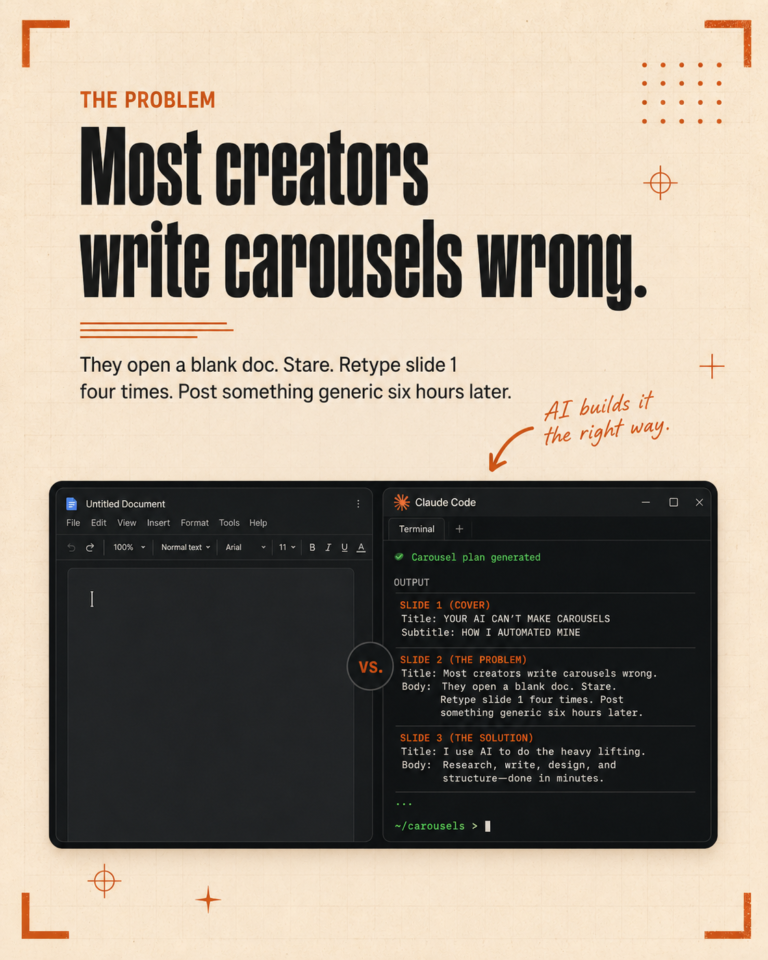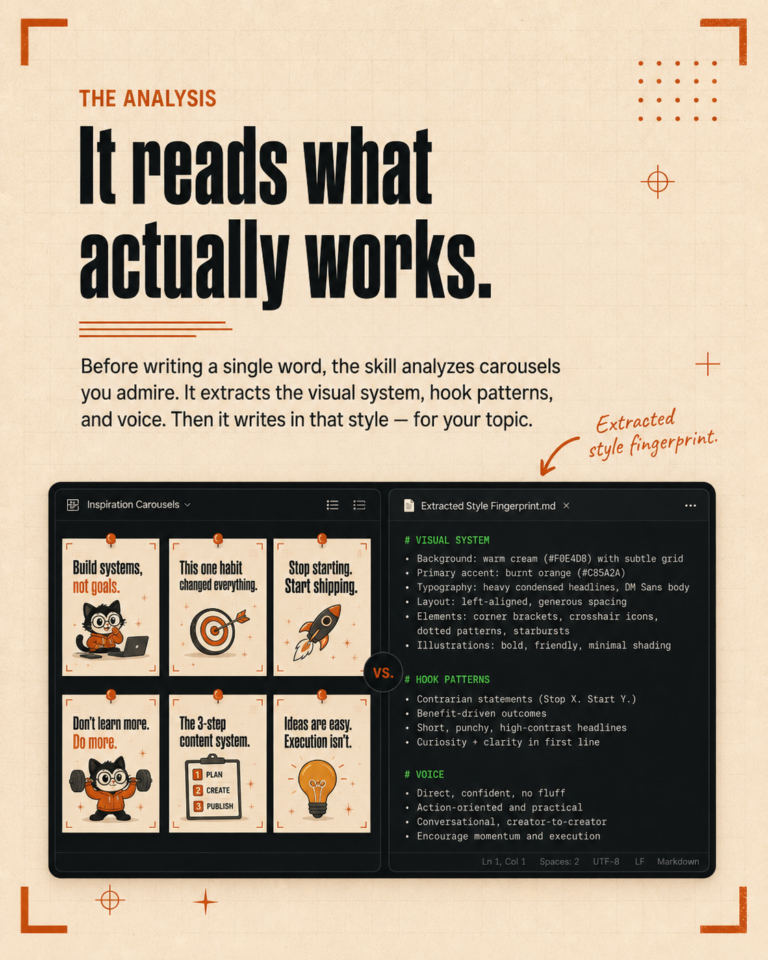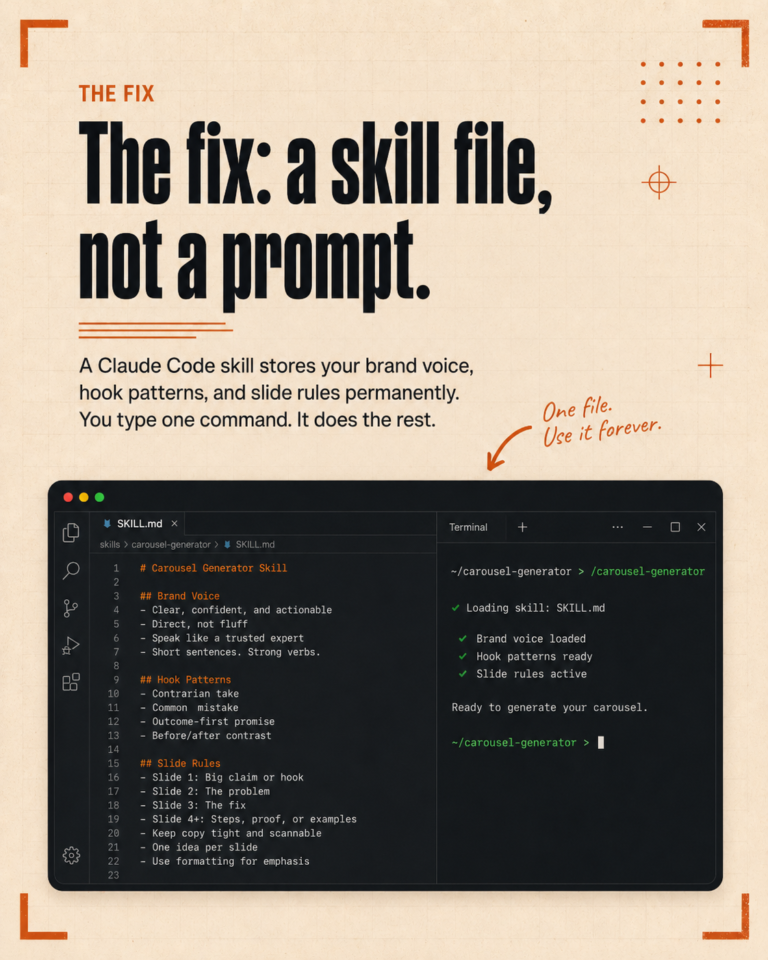
The phrase AI agency is being used to mean two very different things in 2026. The first is an agency that helps clients adopt AI. The second is an agency that runs its own internal work with AI as the production layer. This piece is about the second one, because that is the part that changes how the work actually feels day to day.
This is what we have learned running an agency where AI is woven into every client deliverable, not as a buzzword on the website but as the actual operational infrastructure.
The shift from doing to designing
The biggest mental shift is that your job stops being “produce the work” and starts being “design the system that produces the work.” That is not a small change. Most agency operators got into this work because they like the doing. The shift to designing is uncomfortable for the first few months, because the leverage you create is invisible and the work you skip feels like work you are not doing.
The signal that the shift is happening is when you find yourself spending more time editing CLAUDE.md files and fewer hours editing captions. The leverage is real, but the proof comes later, when a client week ships in three hours instead of fifteen.
What stays human
Strategy stays human. Voice tuning stays human. The first conversation with a new client stays human. The judgment call about whether a campaign is working stays human. Anything that requires reading a person, sensing a market shift, or making a call that affects the next quarter belongs to the operator, not the system.
The list of what stays human gets longer the more the system handles the rest. Once production stops being the bottleneck, the operator attention can finally go to the work that was supposed to be the agency core value all along.
What the AI handles
Repeated production work. First-draft content for any platform. Reformatting between platforms. Hashtag and keyword research. Scheduling and queue management. Reporting and commentary. Cold outreach drafting. Voice-aligned long-form content from a transcript. All of the work where the inputs and outputs are well defined and the rules are stable.
The AI is not better than a senior strategist at any of this. It is faster and more consistent than a junior team member, which is what most agencies actually use this work for anyway.
The economics that change
Pricing is the part that gets most agencies stuck. If you priced retainers based on hours, AI breaks the model from the inside. The work that used to take twenty hours now takes five, and the client cannot tell the difference, which means the value did not change but the cost did.
The agencies that thrive in this shift price for outcomes, not hours. A monthly content output, a campaign launch, a measurable result. The AI is invisible to the client. The output is what they pay for, and the output is the same or better than what the old hourly model produced.
This requires confidence. Many operators are reluctant to charge a fixed rate when the AI did most of the production. The reframe that helped us was simple: the client is paying for the system, not the typing. The system is the product. The AI is the way the system runs.
The team shape that follows
A team running this way looks different than a traditional agency. Fewer junior writers. More senior strategists. More operators who are comfortable in a project folder and a terminal. The hiring profile shifts toward people who can think in systems instead of people who can produce volume.
For a small agency, this often means staying small longer. The work that used to require five people can be run by one or two with a strong system. The instinct to grow headcount fast disappears, because the leverage is in the configuration, not the bodies.
Where this is heading
The agencies winning right now are not the ones with the most polished AI marketing on their website. They are the ones who have already moved their internal work to AI as the production layer and still kept the human judgment that makes an agency worth hiring. From the outside, the work looks the same. From the inside, the work feels almost nothing like what it did two years ago.
If you are thinking about how to bring AI into your own agency operations and you want a second pair of eyes on where to start, book a free call here. We will look at your current workflow and where the first AI-powered system fits.